Build familiarity before perfection.
Short, predictable exposure to sound, touch, standing and face or paw handling can create a better foundation. A first visit may prioritize learning over a complex finish.

Coat, age, sensitivity, lifestyle and home maintenance matter more than repeating a universal schedule.
These categories are practical guides, not diagnoses. Mixed coats can combine several behaviors.
Often need less cutting, but still benefit from bathing, drying, nail care and loose-hair removal. Odor or skin changes are not solved by bathing alone.
Friction areas around ears, legs, collar, harness and sanitary zones can tangle quickly. Consistent comb-through matters.
They can mat close to the skin even when the surface looks fluffy. Shorter grooming intervals are often easier than major resets.
Dense undercoat and seasonal shedding need thorough drying and coat release. Shaving should not be treated as a routine shortcut.
Texture and desired finish influence whether the routine focuses on clipping, tidying, brushing or specialized techniques.
Every dog still needs observation of nails, ears, coat condition, sensitive areas and comfort.
The plan should respect what the dog can comfortably learn, tolerate and physically sustain.
Short, predictable exposure to sound, touch, standing and face or paw handling can create a better foundation. A first visit may prioritize learning over a complex finish.
An appropriate recurring interval makes the session more predictable and reduces the chance that nails, shedding or tangles become corrective work.
Older dogs may need more support, more breaks or a practical comfort trim rather than a detailed style that takes longer to complete.
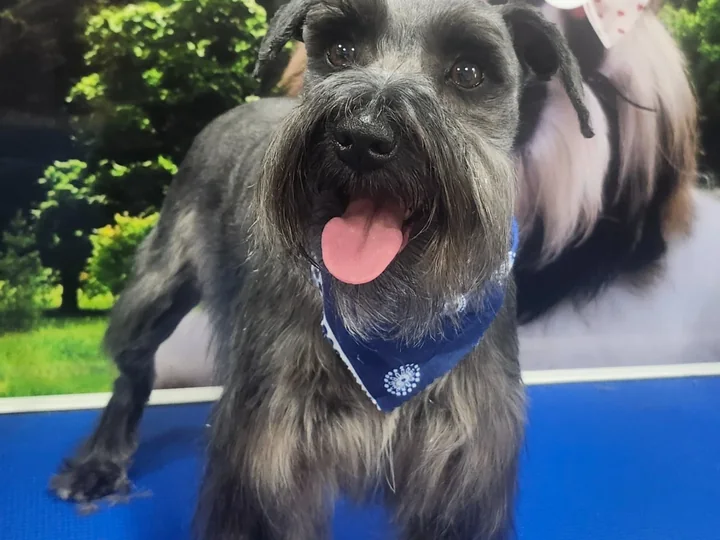
Routine handling can reveal visible changes, but an observation is not a medical conclusion.
We can communicate what we observe and recommend veterinary evaluation. We do not diagnose the cause.
Use these answers as practical orientation, not veterinary advice.
Breed can be helpful, but coat texture, density, length, growth pattern, shedding, current condition and home care often give a more practical picture.
Use the right brush and comb for the coat, work in sections, check friction areas and keep a realistic schedule. Brushing only the surface can leave tangles close to the skin.
Not as a general rule. Double coats have a specific structure. Decisions should consider coat condition, health, matting and veterinary context rather than assuming shaving is always cooler.
Early, gradual exposure can help build familiarity. The first goal should be safe, manageable handling—not demanding an adult-level finished style in one visit.
Mobility, joint comfort, stamina, skin changes and medical conditions may require shorter work, more support, different positions or a modified result.
Send a current photo, approximate weight, age, coat type and ZIP code. We will help you choose the clearest starting point.